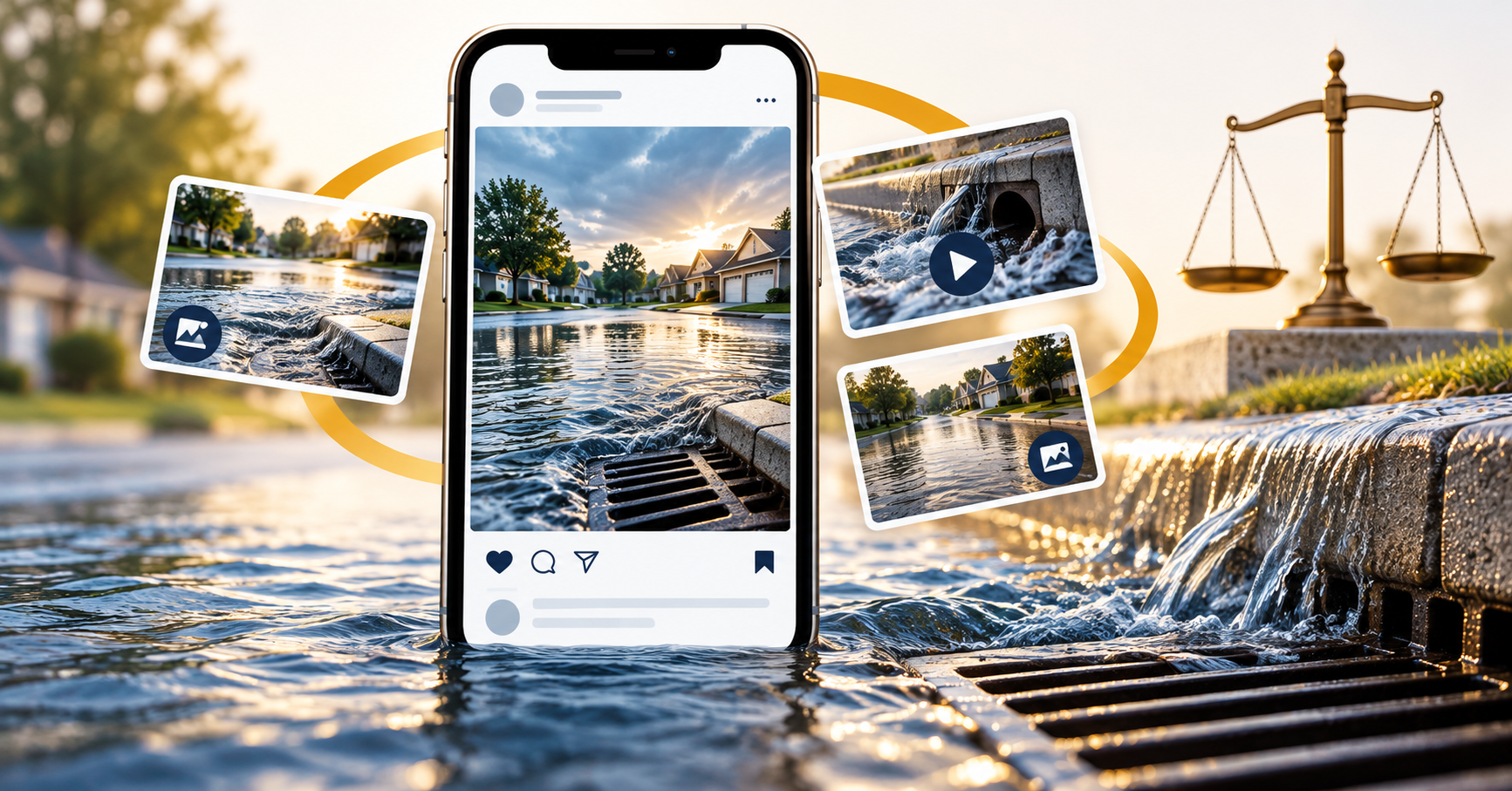
When a street floods, neighbors often post photos and videos before anyone files a report. One person captures water crossing a yard. Another records a blocked drain. A nearby business shares a video of runoff entering its parking lot.
Those posts can draw attention to a problem quickly. They may also become relevant later if questions arise about drainage, property damage, or stormwater management. In a water-related dispute, however, a dramatic video is only one part of the picture.
A post can help establish a timeline
A series of posts from the same neighborhood may show when flooding began, how long it lasted, and where people saw water flowing. That information could help someone identify questions to ask about a storm or a recurring drainage problem.
Context matters. A clip may show water entering a property without showing where it originated. A post’s upload time may differ from the time the video was recorded. And a view from one yard may look very different from conditions a block away.
Public data can add context. The U.S. Geological Survey’s National Water Dashboard provides water-level and related information for monitoring locations across the country. Whether a nearby gauge is useful will depend on the location and the nature of the flooding.
Document damage for the right audience
Someone dealing with flood damage may be tempted to post everything immediately. It is more useful to first create a clear private record: take wide and close-up photos, record when they were taken, and keep copies of relevant messages or notices.
The National Flood Insurance Program’s guidance on documenting flood damage recommends photographing and recording damaged items before cleaning, repairing, or discarding them. Social media posts may supplement that record, but an insurance claim or legal question may require more detail than a public post provides.
If another person’s post appears relevant, save its link and discuss preservation with the appropriate professional. Online content can be edited or removed, and a screenshot may leave out important context.
Know which water issue you are discussing
“Water law” covers more than one kind of dispute. A homeowner’s question about runoff crossing a property line is different from a question about pollutants leaving a construction site.
For example, the Environmental Protection Agency’s stormwater program addresses certain discharges associated with municipal storm sewer systems, construction, and industrial activity. A video of muddy water may prompt a question about those rules, but the video alone cannot establish whether a permit is required or a violation occurred.
That distinction matters on social media, where a short clip can spread faster than the facts needed to explain it.
Use social media to ask better questions
Community posts can reveal that several people experienced the same event. They can help identify locations, dates, and concerns worth investigating. They can also start useful professional conversations about legal issues, provided the discussion stays general and respects the people affected.
Before concluding a viral flooding post, ask what it actually shows, what happened outside the frame, and what other records are available. Social media can help bring a water problem to light. Understanding its legal significance takes a fuller view of the facts.